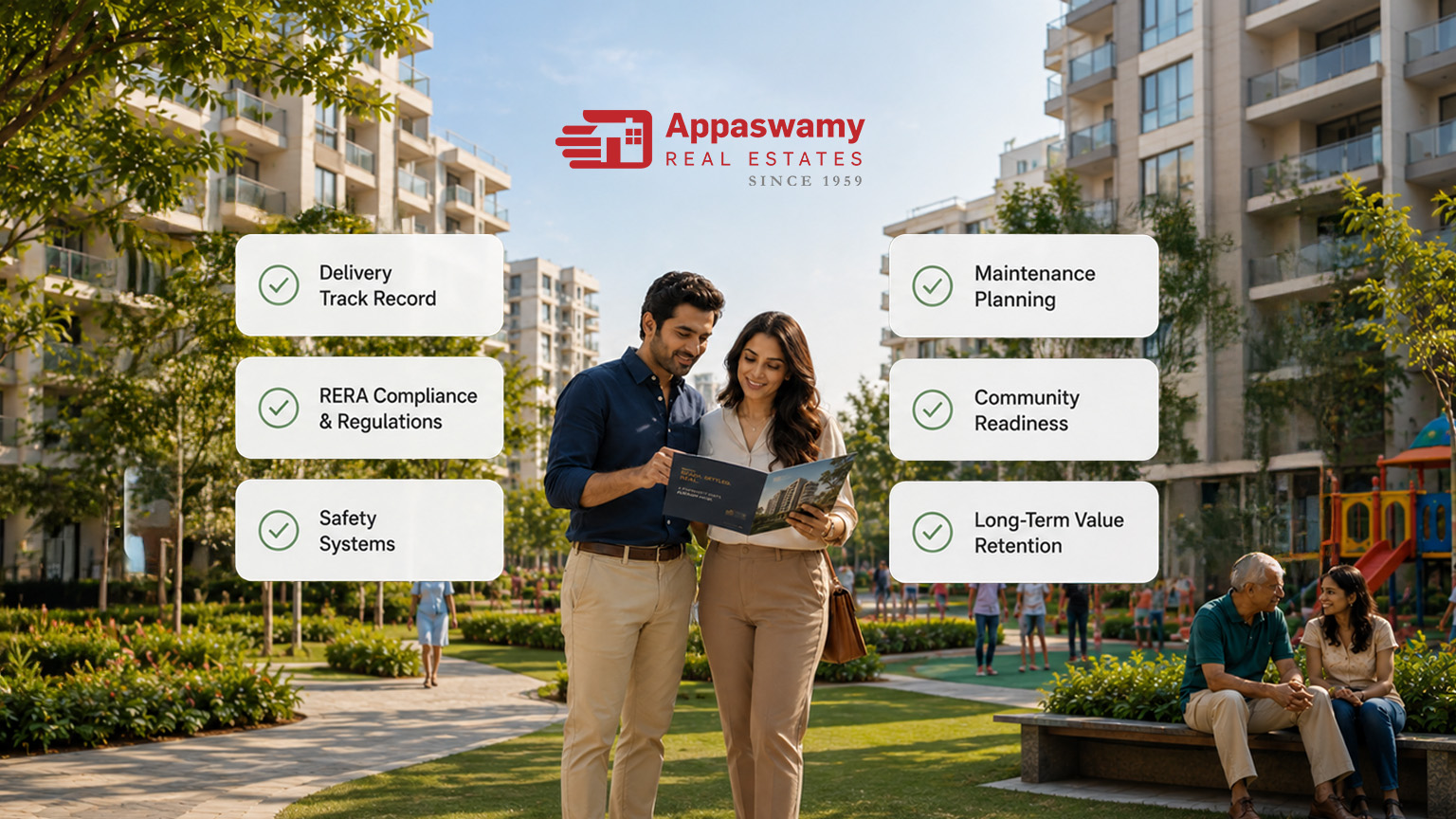
Home-buying in Chennai has taken on a different tone in recent years. The approach is more considered, the questions are more specific, and the expectations are clearly defined. Buyers are spending more time understanding what they are choosing, how it will perform over time, and how it fits into their long-term plans. A home today is seen as both a place to live and an asset that needs to hold its value. That shift has changed what people prioritize.
Completed homes have become a preferred choice for many buyers. The ability to walk through the space, understand the layout, and experience the finish in person adds confidence to the decision. It allows buyers to evaluate the home as it exists, rather than interpreting plans or timelines. Projects such as Altezza in Kottivakkam and Parkhouse Mews in Guindy reflect this preference by offering fully completed residences where every detail can be assessed before purchase.
Regulatory changes have influenced how buyers approach decisions. RERA has introduced defined standards around approvals, financial structuring, and project timelines. As a result, buyers now spend more time reviewing documentation, verifying approvals, and understanding how a project is structured. This has created a more informed buyer who approaches the purchase with a clear checklist of what needs to be in place before committing.
A developer’s track record has become central to the decision-making process. Buyers look at past projects, delivery consistency, and long-term maintenance standards. The focus has shifted from evaluating a single project to understanding the developer behind it. Appaswamy, established in 1959, has built a portfolio of residential communities across Chennai and has been recognized as one of the ET Now Best Realty Brands for 2025–26. This kind of legacy provides a level of familiarity and confidence for buyers making long-term investments.
Environmental considerations are now part of the conversation, especially in how they influence day-to-day living. Features such as solar-powered lighting for common areas and sewage treatment plants contribute to more efficient resource management. These systems also support lower operational costs over time while maintaining environmental responsibility within the development. For buyers, this translates into a home that is planned for both present use and long-term sustainability.
In urban environments, space is defined not just by square footage but by how it is shared. There is a growing preference for developments with fewer apartments per floor and more open layouts across the property. Lower-density planning allows for quieter common areas and a more relaxed living experience. Projects like Belmont and Altezza reflect this approach, where the number of homes is balanced with the overall land area to create a sense of openness and privacy within the community.
Amenities are now evaluated based on how they integrate into everyday routines. Alongside traditional features such as gyms and swimming pools, there is increasing interest in spaces that support flexible work and recreation. Co-working areas, indoor sports courts, and well-designed clubhouses allow residents to manage different parts of their day within the same environment. At Altezza, the clubhouse acts as a central hub where fitness, leisure, and social spaces are all within easy reach, supporting a more efficient daily rhythm.
The 2026 buyer approaches home-buying with clarity and intent. Each decision is shaped by a combination of factors, from design and amenities to developer credibility and long-term sustainability. This shift has made the process more thoughtful and structured, with buyers placing equal importance on how a home feels to live in and how it performs over time.
05 May 2026